I can’t imagine a world without push notifications. Can you?
This simple app feature has become essential to virtually every app on the market. Think about it. How else would essential applications get your attention without them?
And yet, it wasn’t that long ago that they didn’t exist — in a time where critics called us crazy when we first pioneered the earliest version of push notifications on the App Store in 2009.
Back then, we took our big idea, combined it with Gizmo5’s technology (later acquired by Google as the foundation for Google Talk), and created the first iteration of what would later become the standard for VoIP push notifications.
You wouldn’t believe the criticism we received from other softphone providers. They told us our version of push notifications for incoming calls wasn’t safe. That it would lead to security breaches. That the cloud wasn’t safe enough.
The reality? They couldn’t replicate it themselves. And more importantly, they didn’t want to put in the necessary time and resources to make it work.
So, how did we do it? The answer is simple: SIPIS.
Since traditional SIP softphones need to periodically refresh registration on the registrar server to receive calls or text messages. This meant users needed an entity to discreetly maintain SIP registration for them.
Enter SIPIS — an entity that would maintain device registration by securely sending credentials and notifying a user when a call or text comes in. But that wasn’t enough — push notifications couldn’t patch calls through to the device.
A better solution was needed. One that could launch the softphone app when needed and create the unique SIP user agent required to communicate with SIPIS. Think of it like a virtual device the white label softphone uses to notify SIPIS when it’s “ready,” allowing SIPIS to initiate the SIP call to the user.
And then came local push, which we took advantage of to create VoIP local push notifications
From Traditional Push to Local Push: Acrobits' Innovative Approach
Traditional push notifications have some significant limitations. One of the biggest issues is that they rely on a central server to deliver notifications to users.
This means that if the server is down or experiencing a high load, notifications may be delayed or not delivered at all. This can result in a frustrating user experience, and it can also impact the effectiveness of the notifications themselves.
Why Local Push is the Future of Mobile Notifications?
Acrobits recognized these limitations and set out to develop a more efficient and reliable approach to push notifications. They called their new technology "local push," and it has since become an industry standard.
Think push notifications are cool? Wait till you see what Cloud Softphone can do. Elevate your business calls with tech that's always one step ahead.
Build a white label softphone app
Create a custom white-label softphone with Cloud Softphone.
- No devs needed
- Native desktop apps
- 100+ premium features
Local push changed the game, giving users access to a more secure push notification solution in industries that demand reliability and confidentiality.
Now, you may be wondering: how does local VoIP push notifications work?
- Firstly, local push is much more efficient than traditional push notifications. By eliminating the need for a central server, notifications can be delivered much faster and with lower latency. This means that users receive notifications in real-time, without any delays or interruptions.
- Secondly, local push is more reliable than traditional push notifications. Because notifications are sent directly from the app, there is no risk of them getting lost or delayed due to server issues. This ensures that users always receive their notifications, even during periods of high server load or downtime.
- Finally, local push is more user-friendly than traditional push notifications. Because notifications are delivered directly from the app, users can customize their notification settings directly within the app itself. This means that they can choose which notifications they want to receive, and how they want to receive them, without having to go through the app settings.
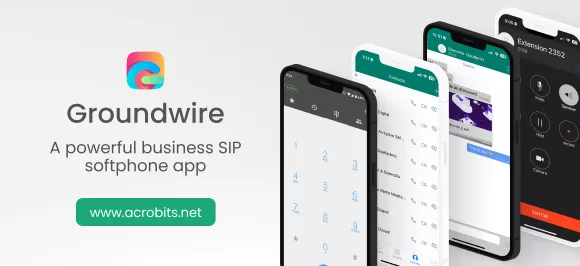
Local Push allows an app to send push notifications using private WiFi networks with SSID where the voice infrastructure doesn’t face the public internet — making local VoIP push notifications an ideal solution for:
- Healthcare facilities with limited network availability and strict HIPAA compliance
- Data security-centric organizations that don’t want sensitive data transmitted unnecessarily over an Internet connection
- Organizations that must prove compliance with privacy-focused regulatory requirements
In Summary
Acrobits' local push technology has become an industry standard because it solves many of the issues that traditional push notifications have.
It delivers notifications faster, more reliably, and in a more user-friendly way, making it the preferred push notification technology for many mobile apps.
Do you want to see first hand how this technology applies to your specific case? Book your free 1-1 demo here.
Clearly a move in the right direction.
Why? Because privacy matters today.
We’ve seen a drastic shift in how OS manufacturers and developers treat the customer experience — and more importantly — digital privacy. We’ve seen the rise of privacy-focused solutions that aim to give users more control over what information they share online.
And if you ask me? It’s amazing to see the large-scale rollout of something like local push. It only validates that our big, crazy idea in 2009 wasn’t that crazy after all.
If you’d like to read how this is unfolding in real-world deployments — I invite you to read this article where we discuss Local VoIP pushes with the CTO of a renowned healthcare provider.
The Acrobits Difference For IM and SMS
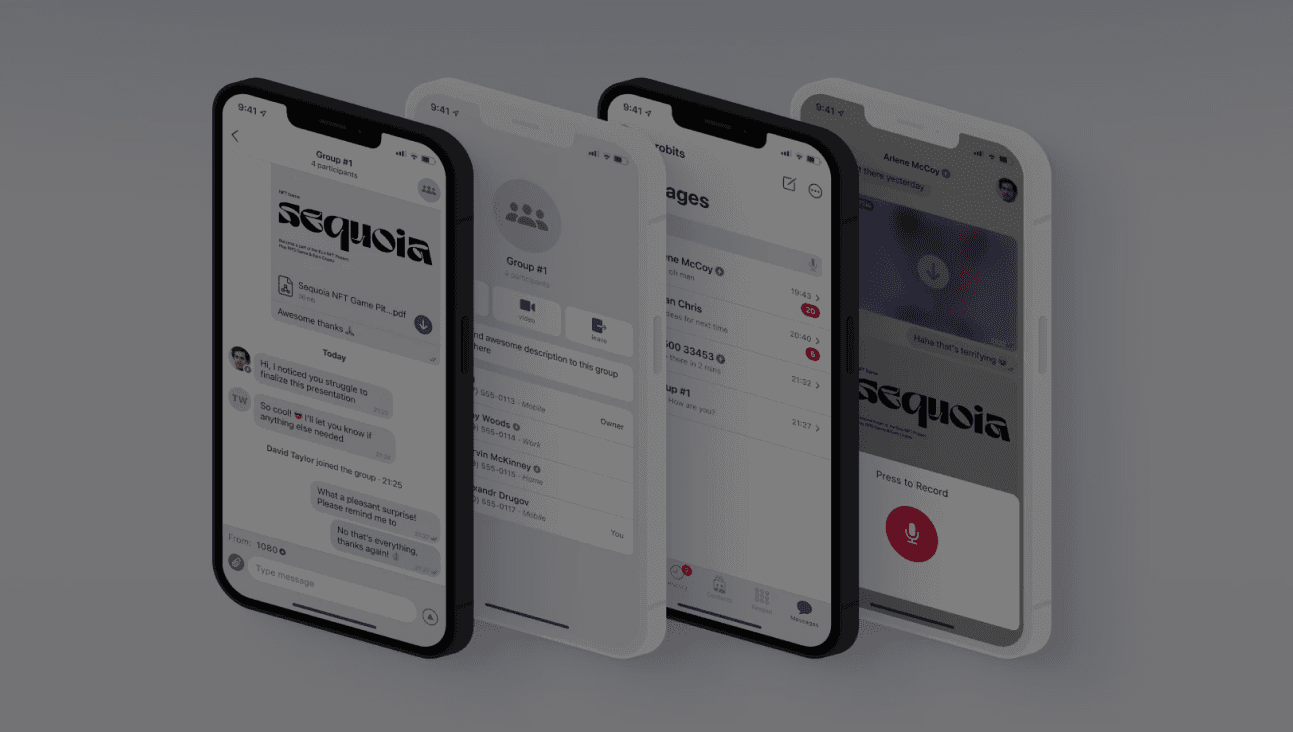
Of course, all of these technical details are of no interest to the end-users, who just want an accessible chat interface. Acrobits understands, so we created Cloud Softphone for instant messaging and SMS.
Our solution supports instant messaging via SIP SIMPLE for on-net communication. All you need is a SIP infrastructure that supports the protocol. Otherwise, we also have IM via Web Services in case you want to send SMSs outside of your provider’s network.
Need a white label VoIP softphone platform quickly and easily? Get in touch with our team today. Our fully customizable softphone solution will streamline communication and keep your business ready for a competitive new year on the market.
Build a white label softphone app
Create a custom white-label softphone with Cloud Softphone.
- No devs needed
- Native desktop apps
- 100+ premium features